Pathao Nepal Now Lets Passengers Set Their Own Fare — Just Like InDrive
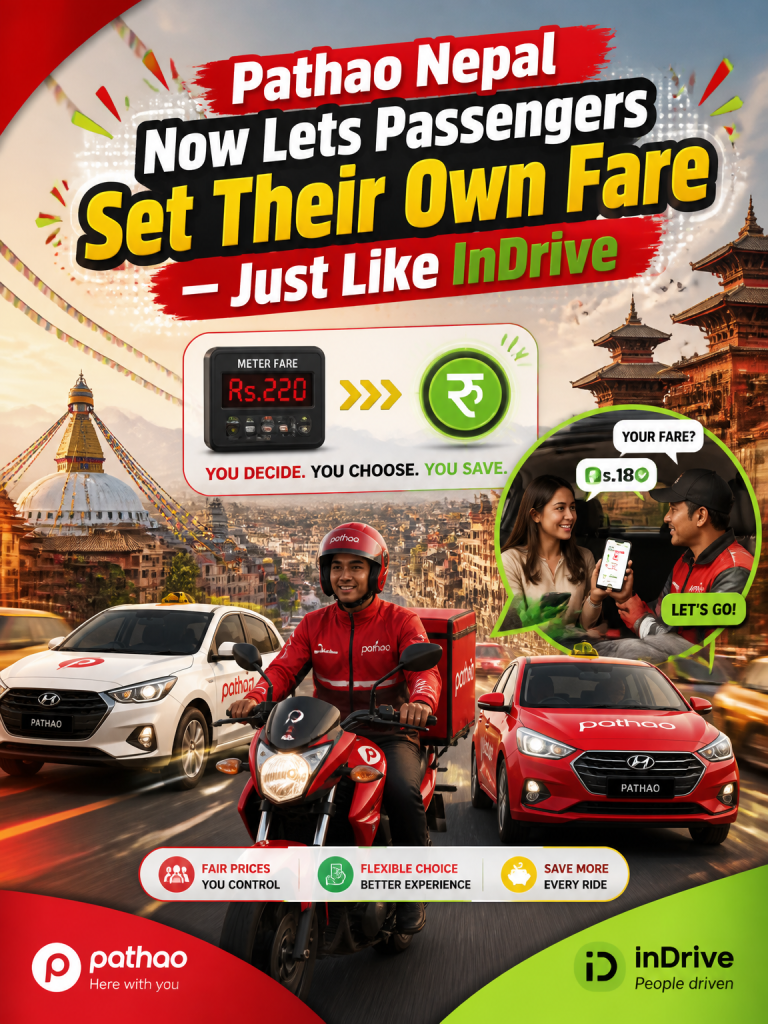
Nepal’s ride-hailing landscape is shifting — and Pathao, the country’s homegrown tech giant, is making a bold move to stay ahead of the competition.
In a significant update to its platform, Pathao Nepal has introduced a passenger-driven fare bidding system, allowing riders to propose their own fare rather than simply accepting a fixed, algorithmically-set price. If this sounds familiar, it should — it’s the exact same model that catapulted InDrive to massive popularity across Nepal and the world.
The question is: Can Pathao reclaim its throne in Nepal’s increasingly crowded ride-hailing market by borrowing one of InDrive’s most beloved features?
What Has Pathao Changed?
Under the revamped Pathao Car and ride-sharing model, the booking experience now works like this:
- A passenger opens the Pathao app and enters their destination.
- The app suggests an estimated fare based on distance, route, and demand.
- The passenger can either accept the suggested fare or name their own fare — bidding what they believe is a fair price.
- The ride request is then dispatched simultaneously to multiple drivers, rather than just one.
- Drivers can accept, counter-offer, or negotiate the fare.
- If a passenger receives multiple offers, they can choose their preferred driver based on the counter-offer price, vehicle model, driver rating, or estimated time of arrival (ETA).
In short: it’s a two-way marketplace where both the passenger and the driver have a say — a stark departure from the traditional, rigid fare-algorithm model.
This bidding feature has also been rolled out in Pathao’s expanded cities beyond Kathmandu Valley, where customers in newly launched markets can bid on the approximate displayed fare when booking rides.
Why This Matters: The InDrive Effect in Nepal
To understand why Pathao adopting this feature is such a big deal, you need to understand why InDrive exploded in Nepal.
InDrive, the global ride-hailing platform now operating across 700+ cities in 47 countries, built its entire identity around one simple concept: let passengers propose a fare, and let drivers decide whether to accept it. No rigid algorithms. No surge pricing surprises. Just negotiation — a concept that resonates deeply with Nepali culture.
And therein lies the genius. Bargaining isn’t just a habit in Nepal — it’s practically a cultural institution. From Asan Bazaar in Kathmandu to the vegetable markets of Pokhara, Nepalis have always valued the ability to negotiate. InDrive tapped into this psychological sweet spot perfectly, and it paid off enormously.
As competition intensified — with Yango (launched in Kathmandu in May 2025) and Sajilo also entering the fray — Pathao found itself under increasing pressure. Riders were reportedly shifting away from Pathao towards platforms offering more flexible pricing. The answer, it seems, was hiding in plain sight all along: give the power back to the passengers.
Pathao vs. InDrive: How Do They Compare Now?
With Pathao now mirroring InDrive’s fare-bidding model, it’s worth asking — how do the two platforms actually stack up?
| Feature | Pathao Nepal | InDrive Nepal |
|---|---|---|
| Fare Setting | App suggestion + passenger bid | Passenger proposes, driver accepts/counters |
| Commission Structure | 1%–20% (based on ride count) | ~10% flat |
| Insurance Coverage | ✅ Yes | ✅ Yes (recently added) |
| Multi-driver dispatch | ✅ Yes | ✅ Yes |
| Intercity Rides | ✅ Yes | ✅ Yes |
| Food & Parcel Delivery | ✅ Yes | ❌ No |
| Presence in Nepal | Nationwide (18+ cities) | Nationwide |
| Driver Ratings & ETA Visibility | ✅ Yes | ✅ Yes |
On paper, the two are now remarkably similar in their core ride-hailing mechanic. However, Pathao holds a significant edge in terms of ecosystem breadth — food delivery, parcel services, and an integrated digital payments system (Pathao Pay) mean it offers far more than just a ride.
A Smart Strategic Move — But Not Without Risks
Adopting a bidding model is a strategically intelligent move for Pathao, but it doesn’t come without trade-offs.
✅ The Upside
- Increased driver satisfaction: Drivers can now filter and choose rides that make financial sense for them, reducing idle time and boosting earnings.
- Competitive pricing for passengers: The open-market model naturally drives fares down during low-demand periods, benefiting price-conscious commuters.
- Faster ride matching: Broadcasting requests to multiple drivers simultaneously means passengers get matched quicker, especially during peak hours.
- Cultural alignment: As seen with InDrive’s success, Nepali users genuinely enjoy the negotiation aspect. Pathao is now leaning into that.
⚠️ The Downside
- Driver exploitation risk: Without a strong minimum fare floor, some drivers may feel pressured to accept unfairly low bids, especially during slow hours.
- Passenger frustration: Users accustomed to Pathao’s clean, fixed-fare model may find the bidding process time-consuming or confusing.
- Race to the bottom: Hyper-competitive bidding could reduce driver income over time, ironically driving the talent that Pathao needs away from its platform.
These are not hypothetical concerns — they are challenges that InDrive itself has had to navigate as it formalised operations in Nepal, including the introduction of a commission structure and mandatory insurance.
The Bigger Picture: Nepal’s Ride-Hailing Market in 2025–2026
Nepal’s ride-hailing industry has entered its most competitive era yet. The government’s legalisation of ride-sharing under the Industrial Enterprises Act 2020, formally gazetted in February 2024, opened the floodgates for expansion and investment.
Today, the Nepali ride-hailing market features:
- Pathao – the established, multi-service Nepali giant now with 18+ city coverage
- InDrive – the global bargain-first platform beloved for its negotiation model
- Yango – the fast-rising newcomer with low base fares and automatic in-ride insurance
- Sajilo – a lean, low-commission competitor carving its own niche
In this environment, differentiation is everything. Pathao’s decision to introduce fare bidding signals that the company is acutely aware of the competitive pressure bearing down on it. Rather than simply doubling down on its food delivery and logistics strengths, it is fighting back on the very front where it had been losing ground.
What This Means for Passengers in Nepal
If you’re a regular Pathao user in Nepal, here’s what you can expect going forward:
- More control over your commute costs. You now have the ability to negotiate, not just accept.
- A wider pool of drivers to choose from before confirming your ride.
- Faster pickups as multiple drivers see your request simultaneously.
- The familiar Pathao safety net — insurance, GPS tracking, and complaint resolution — that InDrive only recently began to match.
For passengers who have been switching to InDrive purely for the bargaining feature, Pathao is now essentially saying: “You no longer need to leave.”
Final Thoughts: Imitation, Innovation, or Evolution?
Is Pathao simply copying InDrive? Perhaps, at the surface level. But in the world of tech startups, the line between imitation and smart adaptation is often blurry — and ultimately, irrelevant to the consumer.
What matters is that Nepali commuters now have more options, more power, and more competition working in their favour than at any point in the country’s ride-hailing history. Fares will likely become more competitive, driver earnings more flexible, and the overall market more dynamic.
Pathao pioneered ride-hailing in Nepal. Now, it’s proving it’s willing to evolve to stay relevant. In Nepal’s fast-moving mobility space, that kind of adaptability isn’t just smart — it’s survival.
Stay updated on Nepal’s startup and tech ecosystem at TheStartupNepal.com — your go-to source for the latest in Nepali entrepreneurship, innovation, and digital economy news.
Tags: Pathao Nepal InDrive Nepal Ride Sharing Nepal Nepal Tech News Pathao Fare Bidding Nepal Startup Ride Hailing App Nepal Pathao vs InDrive Nepal Mobility The Startup Nepal